Optimal Greening
Optimal Greening provides safe water and sanitation with and for marginalized communities across Africa so people can live healthier, more dignified lives.
Why it's notable
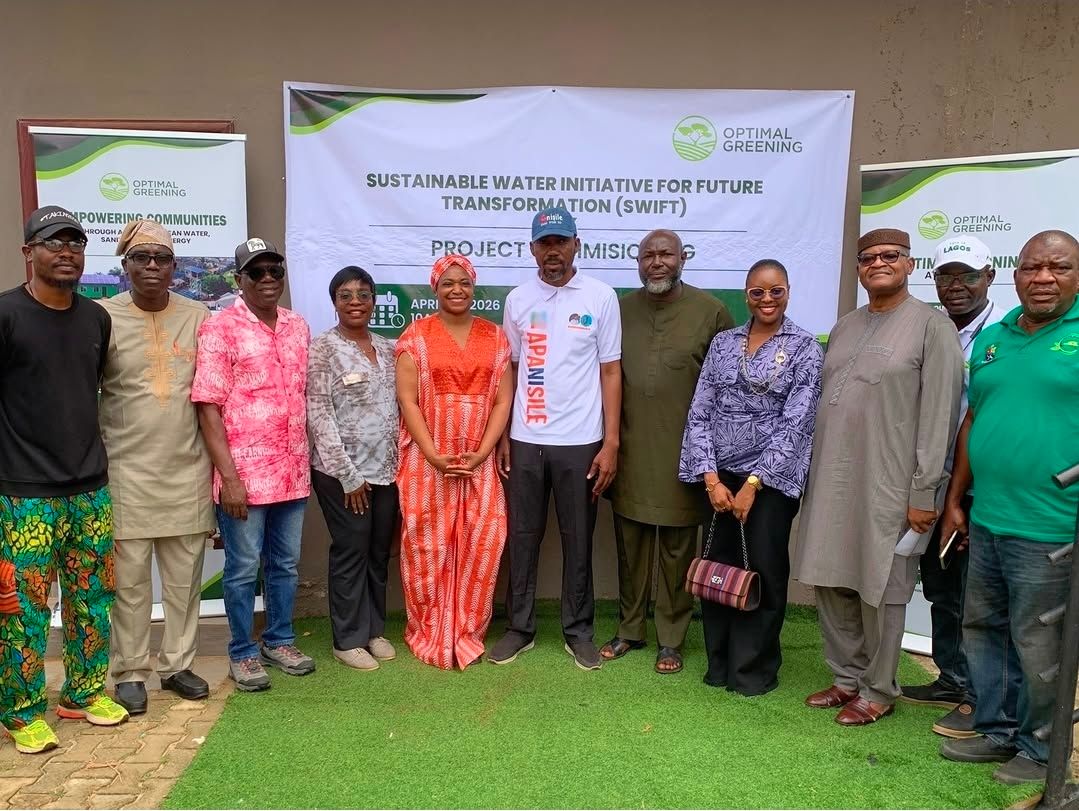
Optimal Greening’s flagship program: Water, Sanitation and Hygiene (WASH), focuses on expanding access to safe drinking water, sanitation and hygiene services for rural and marginalized communities. The program delivers sustainable WASH solutions through solar-powered water treatment systems, improved sanitation infrastructure, community-scale hygiene interventions, and capacity building for community- based organizations. The program integrates innovative and renewable technologies with local governance, enabling communities to sustainably operate and manage their WASH infrastructure over the long term. Optimal Greening collaborates with public and private sector partners, donors, and host communities to co-design, implement, and sustain projects that address the specific needs of local implementing communities. Our solution emphasizes the establishment of inclusive governance structures with strong female representation and a broad range of training sessions for community committees to promote local ownership and accountability. Our robust monitoring, evaluation and learning framework guides project tracking activities far beyond commissioning to ensure communities maintain their WASH infrastructure for long term quality service delivery.
Impact
Optimal Greening has demonstrated measurable environmental, social and health outcomes through our foundational WASH program across several underserved communities. The program has positively impacted 10,000+ direct and 23,000+ indirect beneficiaries, who now have access to clean water, sanitation and hygiene services. The program has created 85+ new operations and maintenance jobs, and trained over 1,660 local community members in good hygiene practices. Our pilot WASH project in Agala, a totally unserved island community, demonstrated a remarkable 81% reduction in waterborne diseases (diarrhea, typhoid and cholera), 30% reduction in healthcare costs, 19% increase in girls’ school attendance and 40% female representation across community governance structures. The project also brought first-time electricity to the island community through the installation of a 13kWp solar PV system, enhancing nighttime security and strengthening community cohesion.